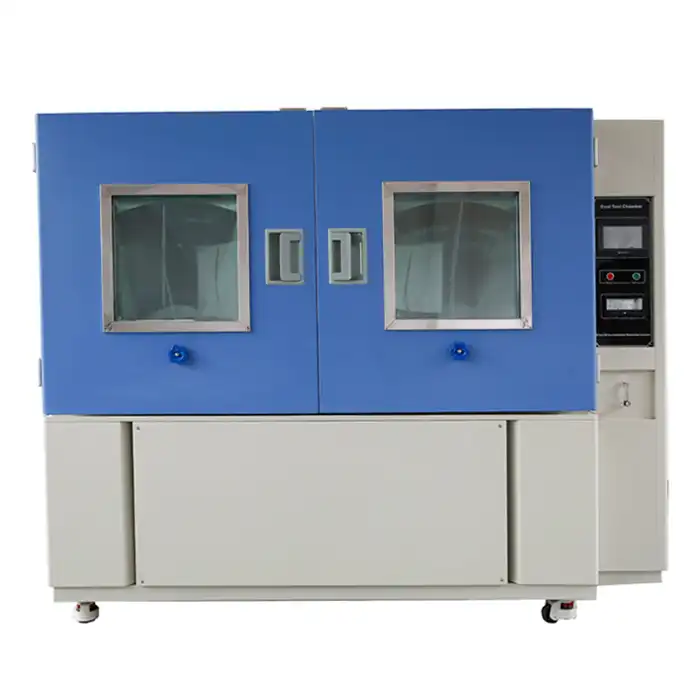
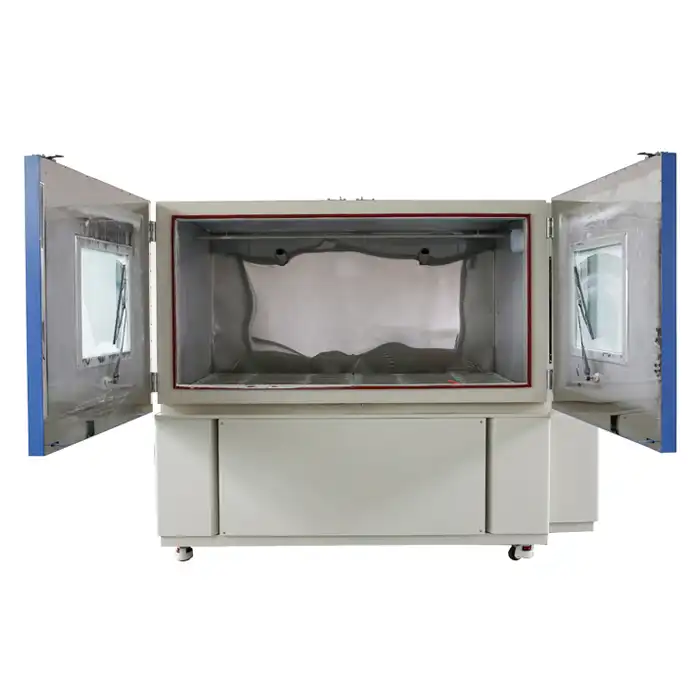
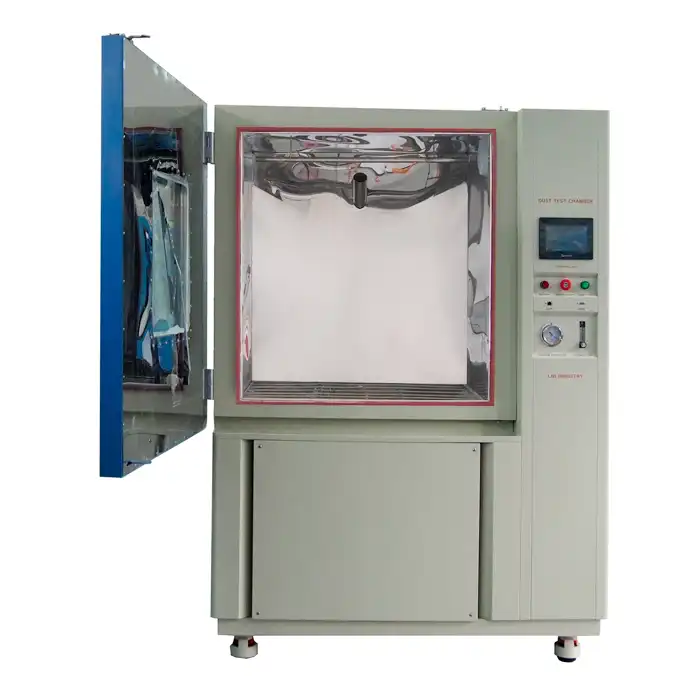
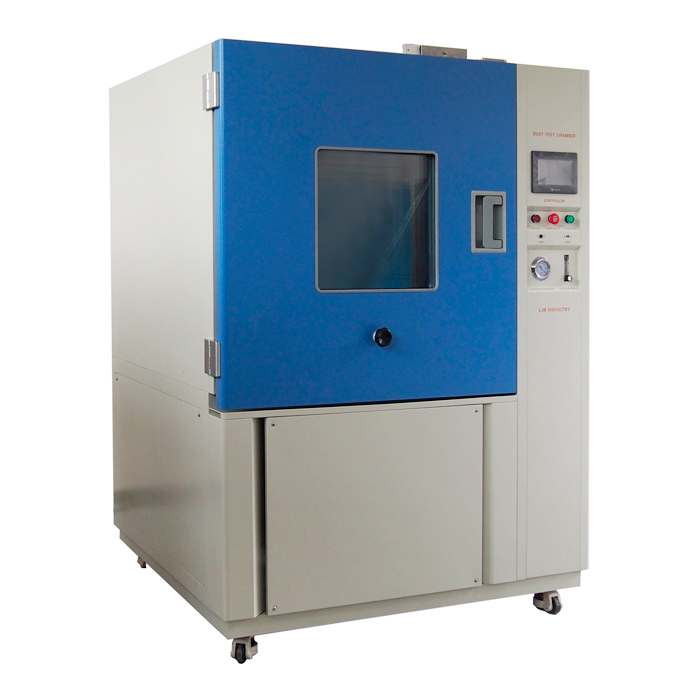
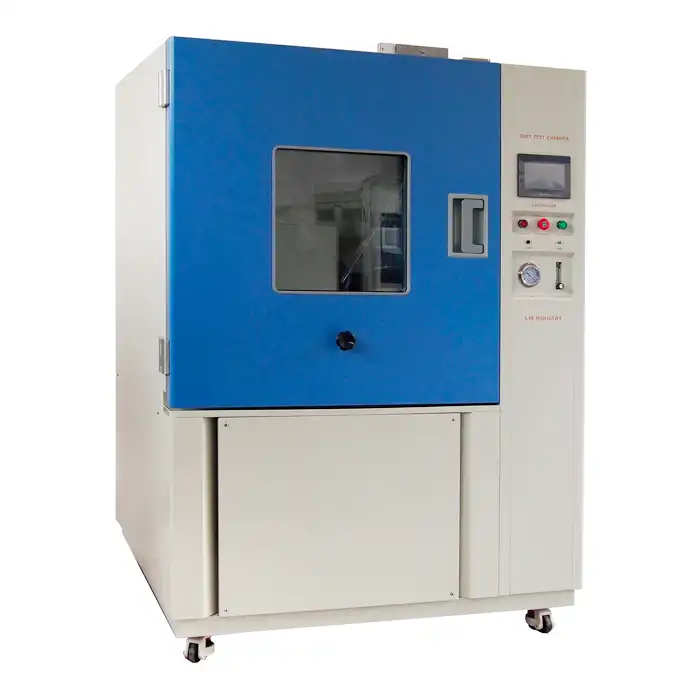
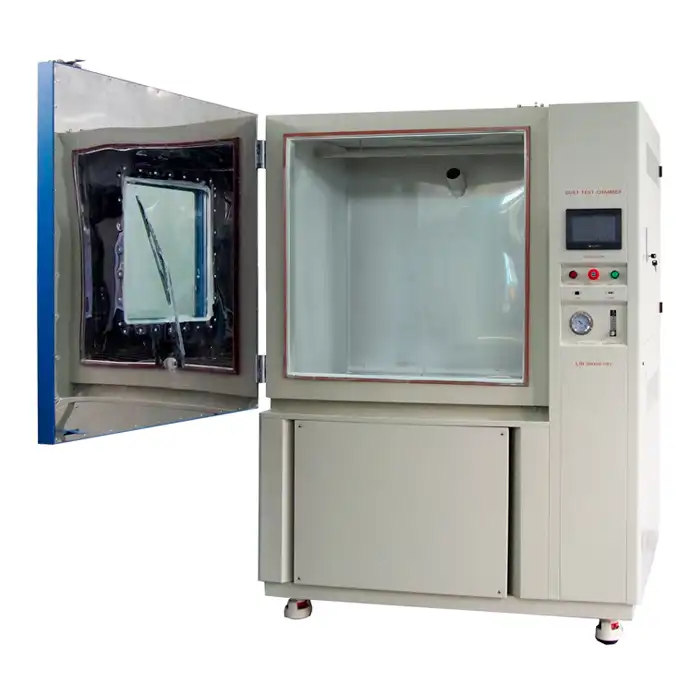
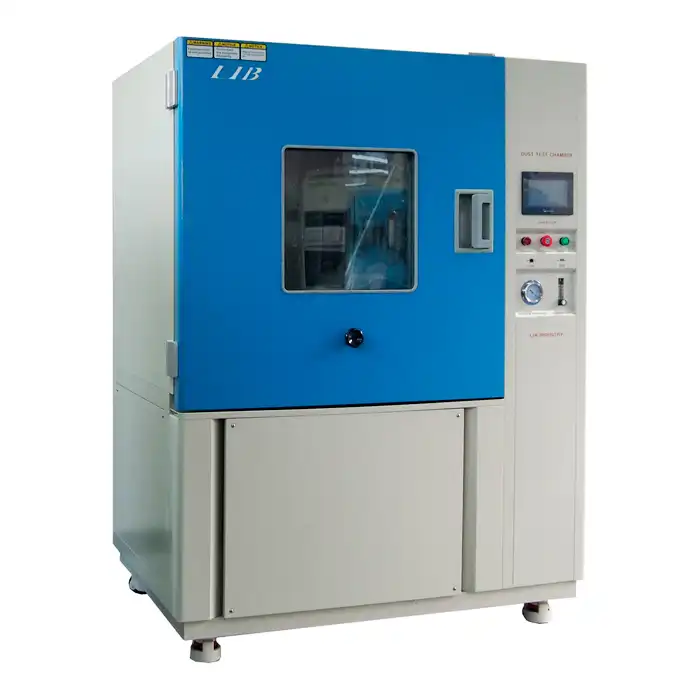
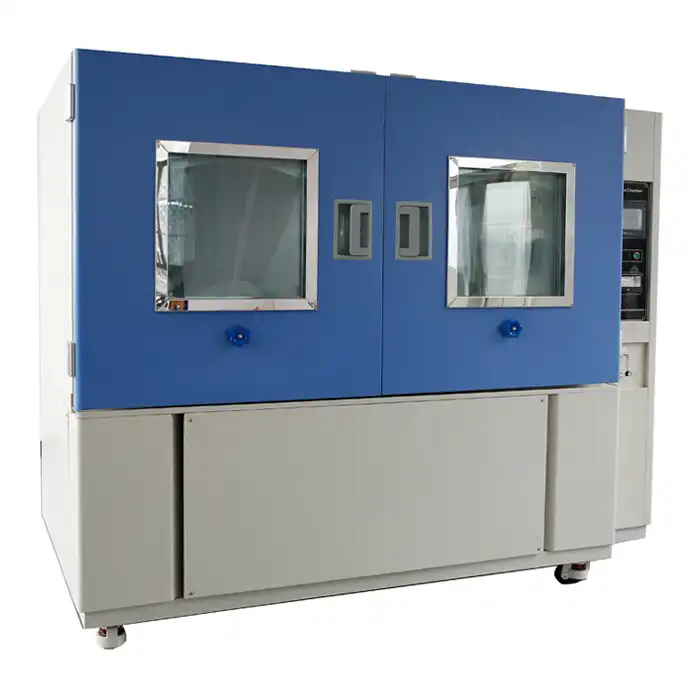
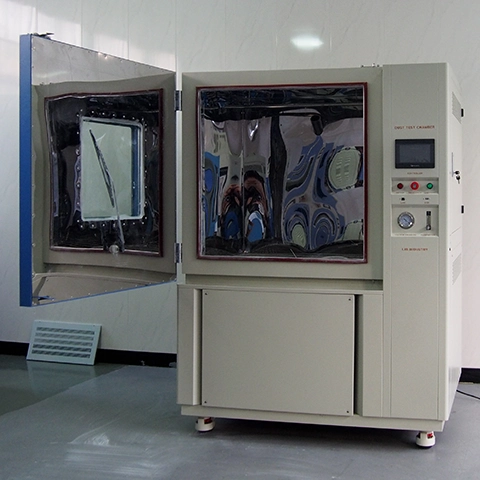
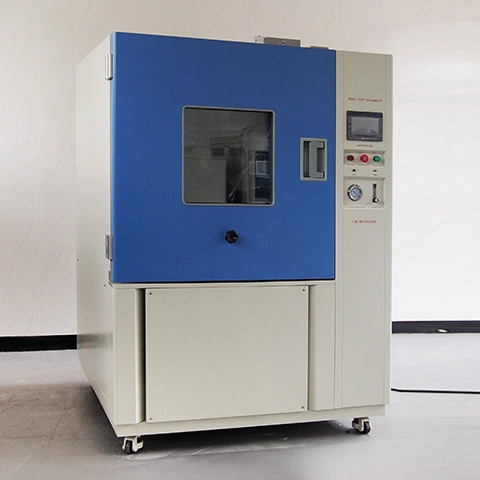
Dust Ingress Test Chamber
Temperature Range:Ambient ~ +50℃
Humidity Range:< 30% RH
Fight Time:0 ~ 99H59M
Blowing Time:0 ~ 99H59M
Specimen Power Outlet:Dust-proof socket 16A
Vacuum System:pressure gauge, air filter, pressure regulator, connecting tube
Dust Ingress Test Chamber: Quantitative Analysis Beyond Pass/Fail Testing
Industrial product development demands precise understanding of how dust affects critical components. Traditional dust-proof testing methods answer a single question: did dust enter the specimen? However, advanced applications in automotive lighting, outdoor connectors, and military optoelectronic equipment require deeper insights. A Dust Ingress Test Chamber provides quantitative analysis that measures dust entry rates, particle size distribution, and accumulation patterns—delivering data that transforms product design decisions. This dust ingress protection chamber enables engineers to move beyond simple pass/fail judgments to comprehensive dust infiltration analysis.
Precision Graded Dust Dispensing System
Real-world environments contain particles ranging from 0.1μm smoke to 150μm fine sand. Different particle sizes exhibit completely different intrusion behaviors. Our talc dust ingress chamber features multi-grade dust hopper systems supporting independent dispensing of:
· Arizona Test Dust (ISO 12103-1, grades A1-A4)
· Talcum powder (75μm sieve specification)
· Silica powder (multiple particle grades)
Each dispensing cycle utilizes electronic balance calibration (0.01g resolution) ensuring consistent dust quantities across test batches. Optional in-line laser particle size analyzers monitor suspended dust in real-time, automatically generating D10/D50/D90 distribution reports for complete particle characterization.
Cyclonic Simulation & Dust Intrusion Path Analysis
Natural environments feature wind-driven particles impacting surfaces at velocity or pressure differentials drawing particles through gaps. Our sand and dust ingress chamber incorporates:
Adjustable Air Circulation System:
· Multi-angle adjustable air ducts
· Wind velocity range: 0.5m/s to 5m/s continuously variable
· Simulates conditions from light breeze to sandstorm intensity
· Dust particles carried at controlled angles and velocities
Dust Ingress Weighing Workstation:
· Pre-test: High-precision balance records initial sample weight
· Post-test: Re-weighing calculates net dust ingress quantity
· Optional endoscope photography system documents internal accumulation patterns
· Automated report generation includes ingress rate, particle distribution, and three-dimensional accumulation mapping
This Dust Ingress Test Chamber methodology reveals how dust enters products under realistic environmental stress, enabling targeted seal design improvements.
Technical Parameters
Parameter | Specification |
Models | DI-800 / DI-1000 / DI-1500 / DI-2000 |
Internal Dimension (mm) | 800×1000×1000 / 1000×1000×1000 / 1000×1500×1000 / 1000×2000×1000 |
Useful Volume | 800L / 1000L / 1500L / 2000L |
Temperature Range | Ambient ~ +50℃ |
Humidity Range | < 30% RH |
Dust Particle Size | Wire Diameter: 50μm; Gap Width: 75μm |
Test Time | 0~99H59M |
Controller | Programmable Color LCD Touch Screen, Ethernet Connection |
Vacuum System | Pressure Gauge, Air Filter, Pressure Regulator |
Safety Protection | Over-temperature, Over-current, Leakage & Phase Sequence Protection |
Interior Material | SUS304 Stainless Steel |
Exterior Material | Coated Steel Plate |
Product Details
|
|
|
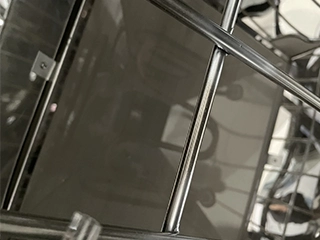
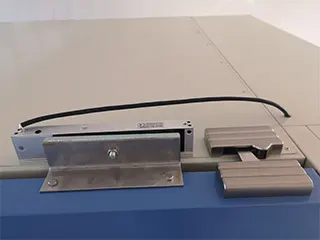
Mesh Sieve The mesh sieve is used to filter the dust that has formed quickly or has a large diameter. The diameter of the mesh is 75 microns | Electromagnetic Lock
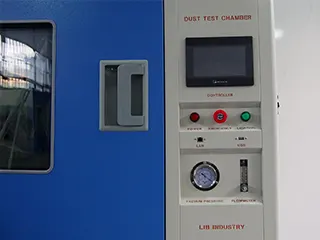
Electromagnetic lock to strong lock the door Unlocking is operated on the controller for safety and prevent malfunction | Controller
PID programmable color touch screen controller network connection computer. Can create120 programs 20 segments. |
|
|
Why Choose Us
International Standards Compliance:
Your testing requirements demand adherence to recognized protocols. Our dust ingress testing equipment exceeds baseline requirements of:
· IEC 60529 (IP5X/IP6X foundation standards)
· ISO 12103-1 (Arizona Test Dust specifications for automotive applications)
· ISO 20653 (Automotive IP protection degrees)
· MIL-STD-810 Method 510 (Military sand/dust testing including blowing sand, blowing dust, and settling dust procedures)
· SAE J726 (Air cleaner test code for cross-industry filtration applications)
Proven Global Partnership
Since 2009, LIB industry has supported leading organizations including Apple, IBM, Intel, SGS, TUV, CERN, BYD, and Mercedes-Benz in 60+ countries. ISO 9001 certified manufacturing and 29 global agents ensure reliable quality and local support.
Comprehensive Service Guarantee
All chambers come with a 3-year warranty and lifetime service support. Our 24/7 team provides fast response, minimizing downtime and ensuring long-term operation.
Customization Expertise
From special test requirements to unique configurations, our engineering team delivers customized chambers with tailored solutions for different testing applications.
Frequently Asked Questions
Q: What distinguishes IP5X from IP6X testing capabilities?
A:IP5X permits minimal dust entry that doesn't harm functionality, while IP6X demands complete dust-tight sealing verified under negative pressure conditions.
Q: Why use talcum powder instead of actual sand?
A:Talcum powder sieved through 75μm mesh accurately simulates fine atmospheric dust most likely to penetrate seals and cause electronic failures in real applications.
Q: How frequently should test dust be replaced?
A:Replace powder after 20-30 test cycles or when moisture absorption causes clumping, which affects suspension density and result validity.
Q: Can your chambers simulate specific wind velocities?
A:Standard chambers provide adjustable circulation; specialized configurations support MIL-STD high-velocity kinetic erosion testing requirements.
Q: Is vacuum capability required for all testing?
A:Vacuum pumps are specifically required for IP6X category 1 enclosures creating pressure differentials during normal operation.
Contact our application engineers at ellen@lib-industry.com to discuss your specific testing requirements and receive a customized solution proposal.