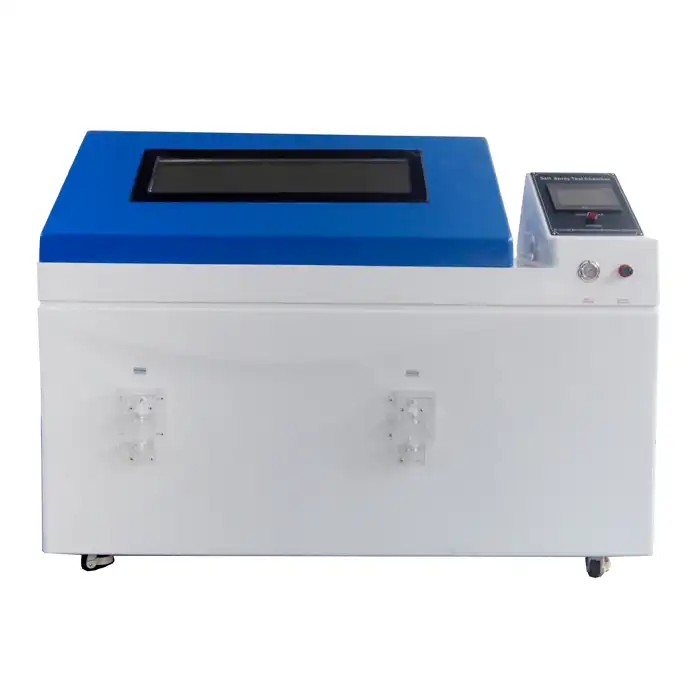
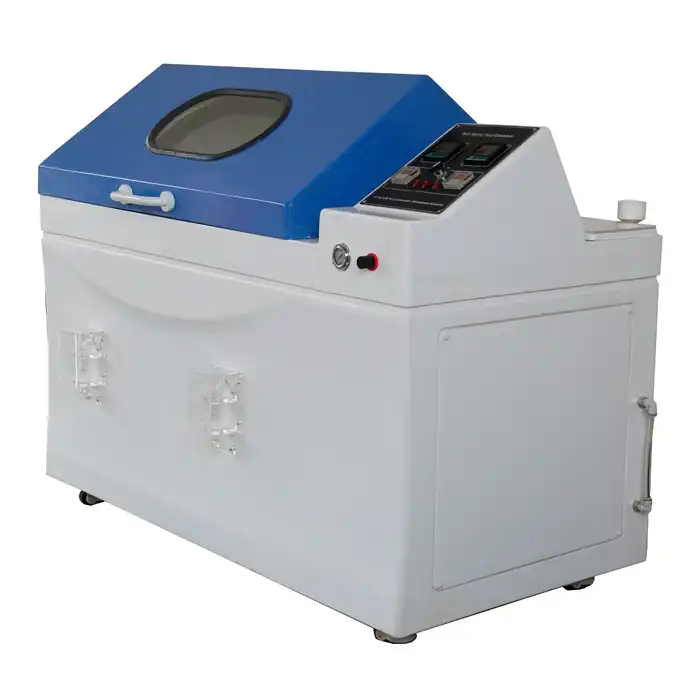
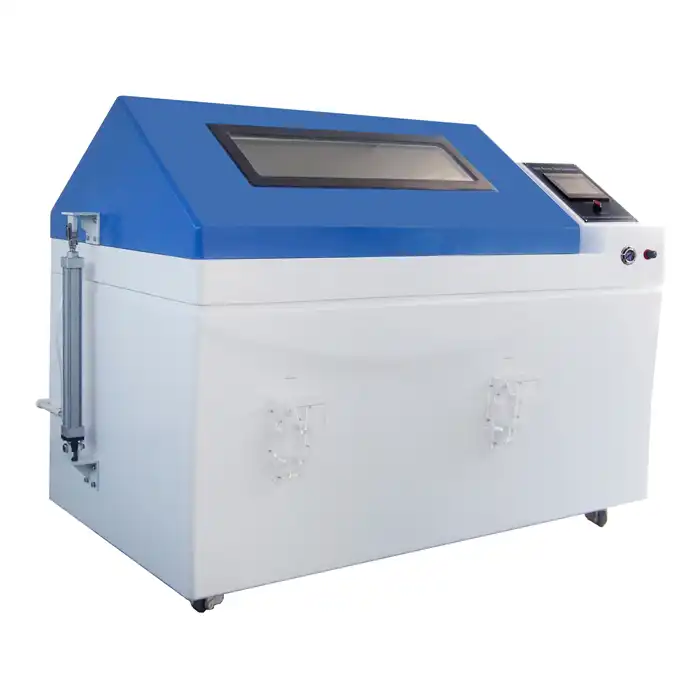
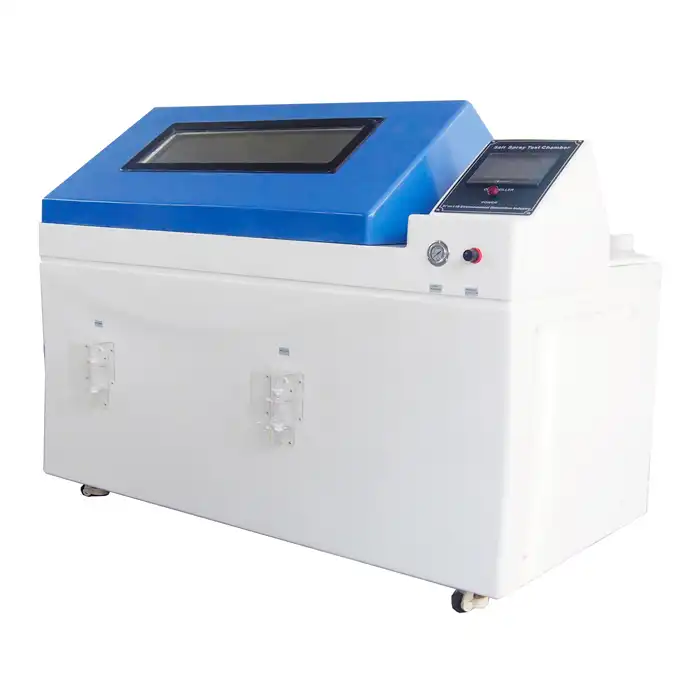
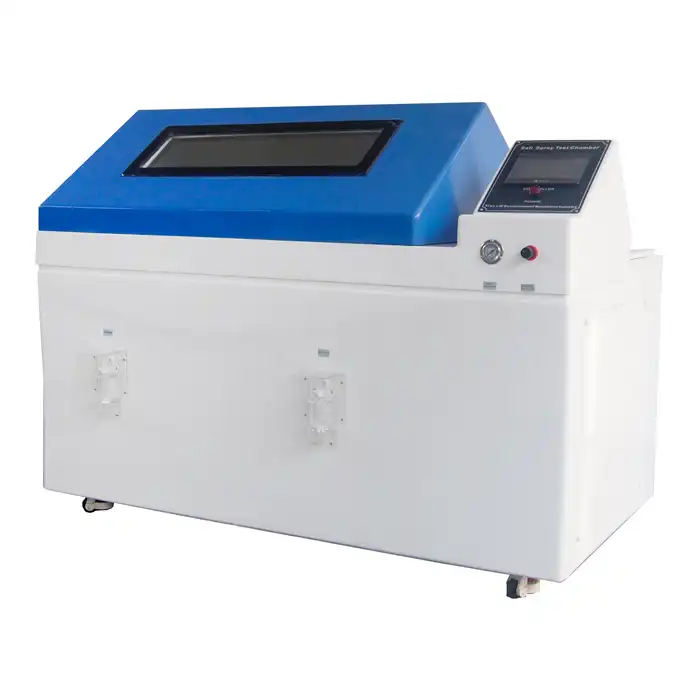
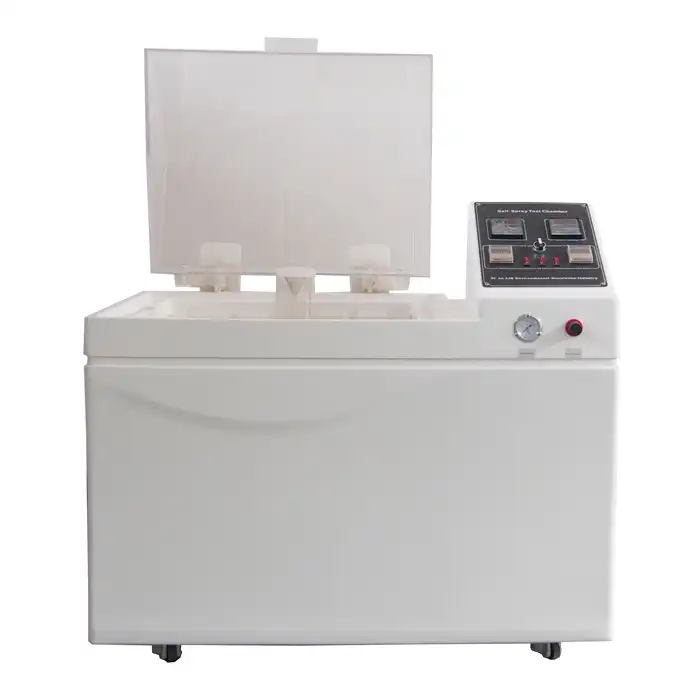
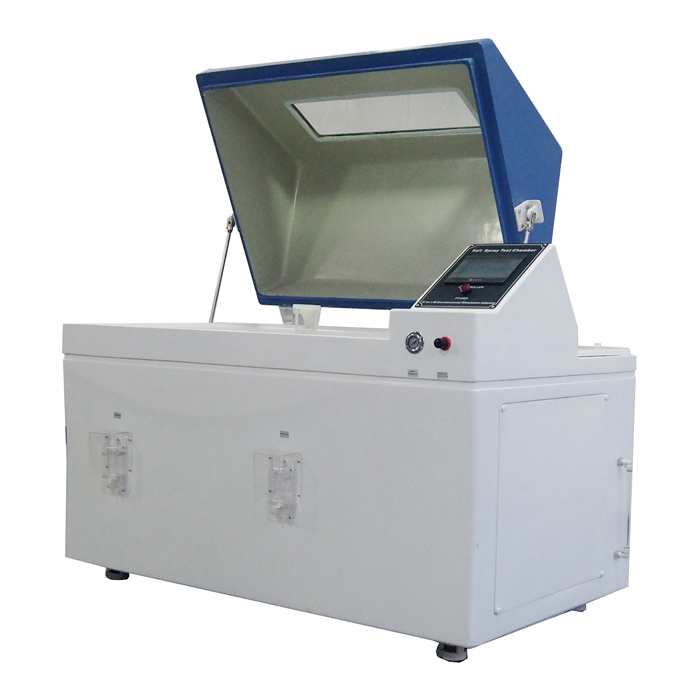
Salt Spray Test Machine
Temperature Range:Ambient: ~ +60 ℃
Humidity Range:95% ~ 98% RH
Salt Fog Deposition:1~2ml / 80cm2 · h
Spray Type: Continuous / Periodic
Materials: Glass fiber reinforced plastics
Standard:ASTMB117, ISO9227
Salt Spray Test Machine Manufacturer & Supplier
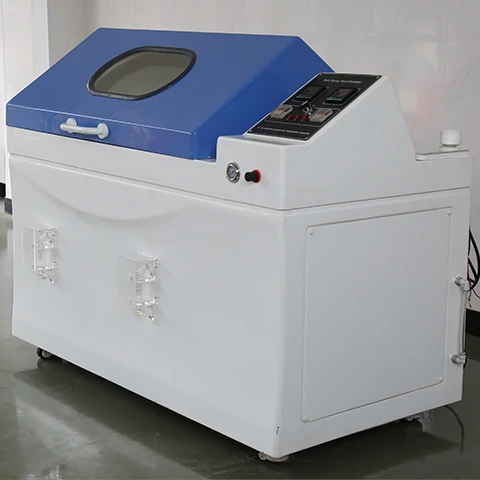
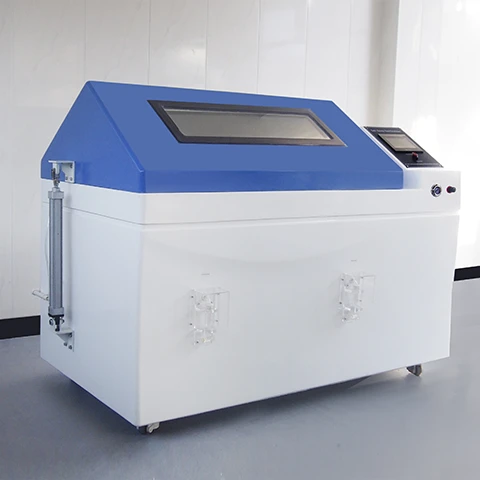
LIB industry's Salt spray test machine is widely used in various industries to evaluate the corrosion resistance of materials and coatings. Salt spray test machines create a controlled corrosive environment by atomizing a salt solution and spraying it onto the test samples.
Volume ranging from 150L to 2700L, including standard and customzied models.
Why Choose LIB Salt Spray Test Machine?
100% Anti-Corrosion FRP Structure: Built with glass fiber reinforced plastics (FRP) that offer high mechanical strength and superior corrosion resistance, providing a service life 3x longer than ordinary PVC chambers.
Clog-Resistant Quartz Spray Nozzles: High-precision quartz glass nozzles ensure ultra-fine atomization and uniform salt fog deposition without easy crystallization or clogging.
Full International Standard Compliance: Perfectly aligned with ASTM B117, ISO 9227, JIS Z 2371, and IEC 60068-2-11 standards. Testing data is recognized worldwide.
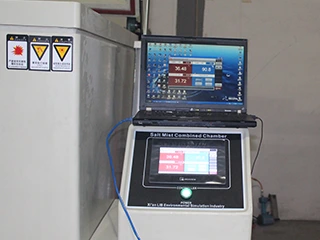
Smart Ethernet & Remote Monitoring: Control and monitor your test process via PC or mobile device. Easily export temperature and humidity curves via USB or Ethernet.
Technical Specifications
Model | S-150 | S-250 | S-750 | S-010 | S-016 | S-020 |
Internal dimensions (mm) | 590*470*400 | 1000*640*500 | 1100*750*500 | 1000*1300*600 | 900*1600*720 | 1000*2000*800 |
Overall dimensions (mm) | 1460*760*1140 | 1850*960*1350 | 1950*1030*1350 | 2000×1300×1600 | 2300×1300×1700 | 2700×1300×1900 |
Interior Volume (L) | 110 | 320 | 410 | 780 | 1030 | 1600 |
Temperature Range | Ambient ~ +60 ℃ | |||||
Temperature Fluctuation | ± 0.5 ℃ | |||||
Temperature Deviation | ± 2.0 ℃ | |||||
Humidity Range | 95% ~ 98% RH | |||||
Salt Fog Deposition | 1~2ml / 80cm2 · h | |||||
Spray Type | Continuous / Periodic | |||||
Salt Fog Collected | Fog collector and fog measure cylinder | |||||
Air Preheating | Saturated air barrel | |||||
Spraying System | Atomizer tower and Spray nozzles | |||||
Controller | PID controller | |||||
Safety Device | Humidifier Dry-combustion Protection; Over-temperature Protection; Over-current Protection; Water Shortage Protection; Earth leakage Protection | |||||
Material | Glass fiber reinforced plastics | |||||
Standard Configuration | 6 round bars and 5 V-shaped grooves | |||||
Product Details
|
|
|
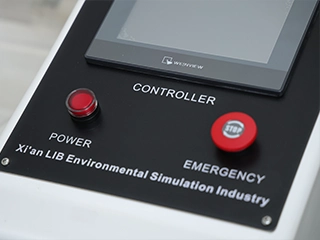
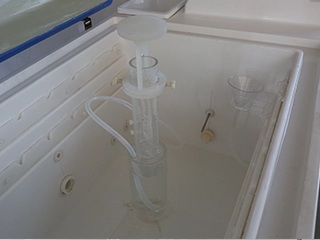
Remote control It can be connected to the computer by various means, such as Wi-Fi, laboratory networking, Ethernet interface, etc | Controller PID control system Language can be selected, English/French/Spanish/German/Russian | Salt Spray Device Spray tower is adjustable in height and spray volume to meet different test standards Salt spray nozzles are easy to clean. |
|
|
Salt Spray Test Machine Features
●Accurate Corrosion Replication: Precisely mimics harsh environments.
●Consistent Testing Results: Ensures reproducible corrosion test outcomes.
●Glass fiber reinforced plasticsConstruction: Resistant to corrosion for prolonged machine lifespan.
●Flexible Sample Capacity: Accommodates various sample types and sizes.
Application Fields
The Salt Spray Test Machine finds application in automotive, aerospace, coatings, metals, and more. It aids in developing corrosion-resistant materials crucial for product reliability and longevity.
Quality Assurance & Global Support
3-Year Warranty: Long-term manufacturer warranty with lifetime free technical support.
International Certification: CE Certified, ISO 9001 quality system compliant, with factory calibration certificates provided.
How Salt Spray Test Machine Maintainace?
To maintain a salt spray test machine, you can follow these steps:
1. Regular cleaning: Clean the machine regularly to remove any salt residue or buildup. Use a mild detergent or cleaning solution recommended by the manufacturer. Avoid using abrasive materials that could damage the machine.
2. Check the solution: Regularly check the salt solution used in the machine. Ensure that the concentration of salt is within the specified range. If necessary, adjust the concentration by adding more salt or distilled water.
3. Inspect the nozzles: The spray nozzles are crucial for the proper functioning of the machine. Inspect them regularly to ensure they are clean and not clogged. If any clogs are found, clean the nozzles using a suitable cleaning solution or replace them if necessary.
4. Monitor temperature and humidity: Maintain the test chamber at the desired temperature and humidity levels. Regularly calibrate and check the accuracy of the temperature and humidity controllers.
5. Check electrical connections: Inspect the electrical connections and wiring to ensure they are secure and free from any damage. Tighten any loose connections and replace any damaged wires or components.