Salt Spray Test Chamber: Standards, Requirements, and How to Choose the Right Equipment
Salt spray testing is widely used to evaluate the corrosion resistance of metals, coatings, surface treatments, and finished components. But reliable corrosion data depends on more than simply placing a specimen in a chamber and spraying salt solution. The salt spray test chamber must maintain the temperature, solution concentration, spray distribution, and other conditions required by the applicable standard.
For manufacturers comparing equipment, the key question is not only which salt spray test standard applies, but also whether the chamber can consistently reproduce the required test conditions.
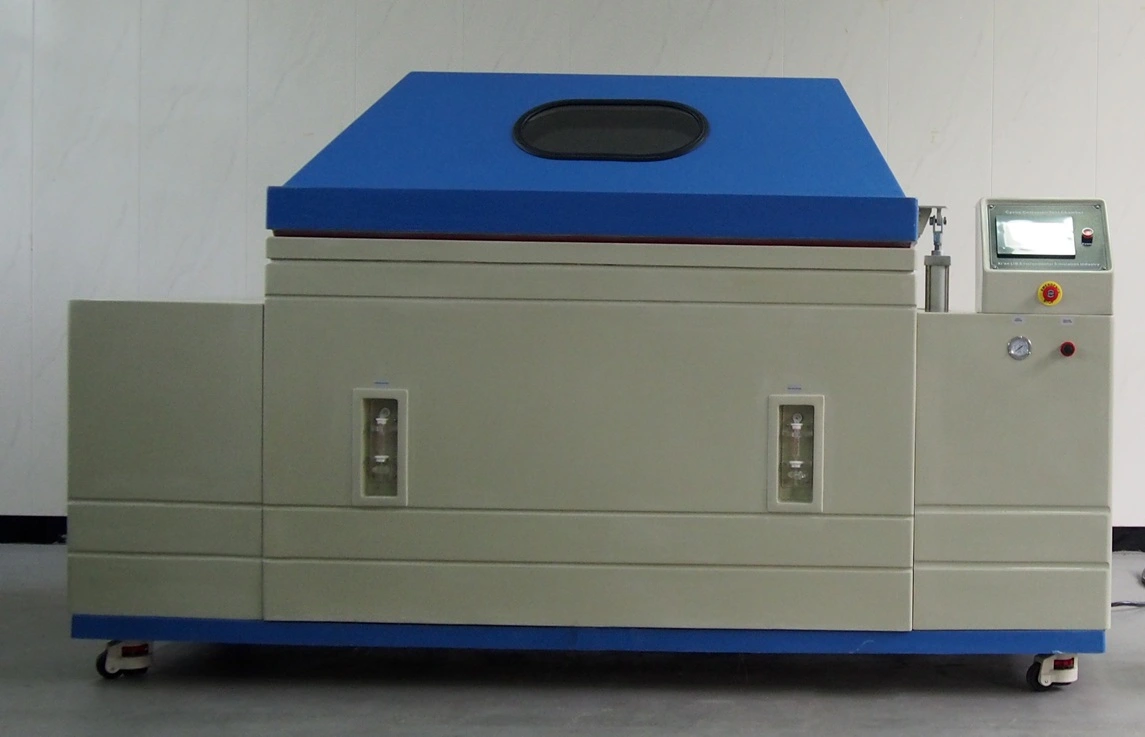
LIB Industry provides salt spray testing solutions for automotive, electronics, aerospace, coatings, hardware, and other industries, with chamber configurations designed around standards such as ASTM B117 and ISO 9227.
Need a test chamber for ASTM B117 or ISO 9227? Request a quote in 24 hours.
Which Salt Spray Test Standards Should You Follow?
Several international standards are commonly referenced when selecting a salt spray test chamber. The appropriate method depends on the material, coating, industry, and purpose of the test.
ASTM B117: Neutral Salt Spray Testing
ASTM B117 is one of the most widely used references for neutral salt spray testing. It establishes requirements for generating and maintaining a controlled salt spray environment, including chamber temperature, salt solution preparation, atomization, and spray collection.
For manufacturers using a salt spray test chamber for routine corrosion comparison and quality control, ASTM B117 is often an important starting point.
ISO 9227: NSS, AASS, and CASS Testing
ISO 9227 covers several salt spray methods, including:
-
Neutral Salt Spray (NSS)
-
Acetic Acid Salt Spray (AASS)
-
Copper-Accelerated Acetic Acid Salt Spray (CASS)
This makes ISO 9227 particularly useful for laboratories serving different materials and industries. The solution composition and test conditions vary between methods, so the chamber should be configured according to the specific procedure being used.
JIS Z 2371 and Other Industry Requirements
JIS Z 2371 is another commonly referenced salt spray testing standard, particularly in Japanese manufacturing and supply chains. In addition, automotive manufacturers and individual customers may specify their own corrosion testing procedures.
Therefore, buyers should confirm the required standards before selecting chamber size, spray system, temperature control, and accessories.
| Standard | Main Method | Typical Application |
|---|---|---|
| ASTM B117 | Neutral salt spray | General corrosion testing |
| ISO 9227 | NSS / AASS / CASS | International corrosion testing |
| JIS Z 2371 | Salt spray | Japanese industrial applications |
What Conditions Must a Salt Spray Test Chamber Control?
A standards-compliant chamber needs to control several variables simultaneously. These parameters directly affect corrosion development and test repeatability.
Temperature and Spray Environment
Temperature stability is essential because corrosion reactions are affected by environmental temperature. Salt spray chambers are typically designed to maintain approximately 35°C for common neutral salt spray testing, with appropriate control accuracy according to the applicable standard.
The chamber must also generate a consistent salt mist rather than uneven or concentrated spray. Poor distribution can cause different specimens or chamber locations to receive significantly different exposure.
Salt Solution Preparation
The salt solution is another critical variable. For neutral salt spray testing, a commonly used solution contains 5% sodium chloride, but the exact concentration, pH, water quality, and preparation procedure depend on the selected standard.
A reliable chamber should therefore provide a stable spray system and make solution preparation, replenishment, and maintenance practical for laboratory operators.
Spray Collection and Uniformity
Spray distribution is normally verified through collection devices positioned at specified locations within the chamber. Consistent collection rates indicate that the test area is receiving an appropriate and uniform salt mist.
This is why chamber design matters. Nozzle position, spray tower configuration, internal geometry, and airflow can all influence test uniformity.
How Do Salt Spray Requirements Differ by Industry?
The same salt spray chamber may be used for different products, but the required test duration and procedure can vary considerably.
Automotive Components
Automotive parts are exposed to road salt, moisture, temperature changes, and other corrosive conditions. Salt spray testing is commonly used to evaluate metal components, fasteners, coatings, surface treatments, and assemblies.
For automotive customers, a chamber with stable spray distribution, programmable testing, and sufficient working volume can improve testing efficiency when multiple components must be evaluated.
Aerospace Materials
Aerospace components may require corrosion testing for aluminum alloys, protective coatings, and specialized surface treatments. Depending on the material and specification, more aggressive salt spray methods may be selected.
Testing equipment therefore needs to support the required solution and environmental conditions rather than relying on a one-size-fits-all configuration.
Marine and Industrial Products
Marine hardware, outdoor equipment, enclosures, and industrial components can face prolonged exposure to chloride-containing environments. Salt spray testing can be used for coating comparison and accelerated corrosion evaluation before field deployment.
For larger products, the chamber volume becomes an important purchasing consideration.
LIB Industry provides salt spray test chambers in multiple sizes and configurations for different specimen dimensions and testing requirements. [Check specifications and pricing → Salt Spray Test Chamber]
How to Choose the Right Salt Spray Test Chamber?

Choosing equipment based only on chamber volume or purchase price can lead to unnecessary costs. A better approach is to compare the equipment against your actual testing requirements.
1. Confirm the Applicable Standard
Start with the test method your laboratory must perform. ASTM B117, ISO 9227, JIS Z 2371, customer specifications, and automotive OEM procedures may require different configurations.
2. Select the Appropriate Chamber Size
LIB Industry offers salt spray chambers from approximately 110 L to 3000 L, allowing laboratories to select a working volume according to specimen size and testing quantity.
A chamber should provide enough space for proper specimen placement without unnecessarily increasing equipment cost or laboratory footprint.
3. Check Chamber Construction
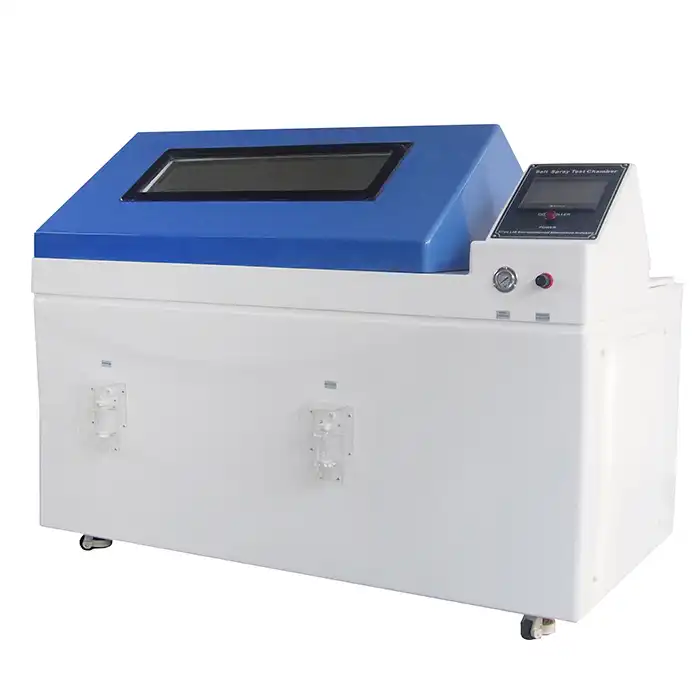
Salt solution creates a highly corrosive environment, so chamber materials should be selected for long-term resistance. LIB chambers use corrosion-resistant FRP construction for the chamber body, helping protect the equipment during extended testing.
LIB salt spray test chamber view
4. Evaluate Control and Data Functions
For laboratories conducting frequent or regulated testing, programmable control, automatic operation, data recording, and remote monitoring can reduce operator workload and improve traceability.
These functions are particularly useful when multiple test cycles need to be repeated under consistent conditions.
5. Consider Maintenance and After-Sales Support
Salt spray chambers require regular cleaning, solution management, nozzle inspection, and replacement of consumable or wearing components.
A supplier's service capability therefore matters as much as the initial equipment specification. LIB Industry provides 3-year warranty coverage, lifetime technical support, spare parts assistance, installation guidance, and after-sales support to help customers maintain stable operation after installation.
What Salt Spray Test Chamber Does LIB Industry Provide?
LIB Industry designs salt spray testing equipment around the standards and practical requirements of different laboratories rather than offering only one fixed configuration.
Flexible Chamber Sizes
Chamber capacities from 110 L to 3000 L can accommodate small laboratory specimens as well as larger components and batches of samples.
Stable Environmental Control
PID-based control systems help maintain the required chamber temperature, while the spray system is designed for consistent salt mist generation and distribution.
Corrosion-Resistant Construction
FRP construction and corrosion-resistant internal components are suited to the demanding environment created by continuous salt solution exposure.
Multiple Testing Configurations
LIB can configure equipment for different salt spray methods and customer requirements, including standard neutral salt spray applications and customized test arrangements.
Explore LIB salt spray chamber specifications
Why Consider LIB Industry as Your Salt Spray Chamber Manufacturer?
The equipment purchase is only the beginning of a long-term testing program. A reliable manufacturer should also support installation, commissioning, operation, maintenance, and future technical requirements.
LIB Industry has been providing environmental simulation and reliability testing equipment since 2012 and supports customers in more than 60 countries.
Key service advantages include:
-
3-year warranty
-
Lifetime technical support
-
Installation and operator guidance
-
Spare parts support
-
Customized chamber configurations
-
Fast technical response
-
Remote troubleshooting and after-sales assistance
If the equipment cannot be repaired during the warranty period, LIB provides a replacement solution according to the warranty terms.
Recommended Corrosion Testing Equipment
Different corrosion mechanisms require different test equipment. If your testing program extends beyond conventional salt spray exposure, consider the following LIB solutions:
|
|
|
|
|
Salt Spray Test Chamber ASTM B117, ISO 9227, coating and corrosion evaluation |
Cyclic Corrosion Test Chamber Alternating salt spray, humidity, drying, and temperature conditions |
Humidity Corrosion Test Chamber High-humidity and condensation-related corrosion evaluation |


FAQs
What is the difference between ASTM B117 and ISO 9227?
ASTM B117 mainly covers neutral salt spray testing, while ISO 9227 includes NSS, AASS, and CASS methods. The correct standard depends on your product, material, and customer requirements.
How long should a salt spray test last?
There is no universal test duration. The required exposure time should be determined by the applicable standard, product specification, coating system, or customer requirement.
How often does a salt spray chamber need maintenance?
Regular cleaning, solution checks, nozzle inspection, and calibration verification are recommended. Actual maintenance intervals depend on usage frequency and the chamber configuration.
What after-sales service does LIB Industry provide?
LIB Industry provides a 3-year warranty, lifetime technical support, installation guidance, spare parts support, and remote after-sales assistance. Customized service can also be arranged for specific laboratory requirements.
Choose the Right Salt Spray Test Chamber for Your Corrosion Testing
Selecting a salt spray test chamber should begin with the applicable testing standard and then consider chamber volume, corrosion-resistant construction, spray uniformity, control functions, maintenance requirements, and after-sales support.
LIB Industry can recommend a suitable configuration based on your testing standard, specimen size, test quantity, and application requirements.
Contact LIB Industry:
Email: ellen@lib-industry.com